
Enhancing a Real Image
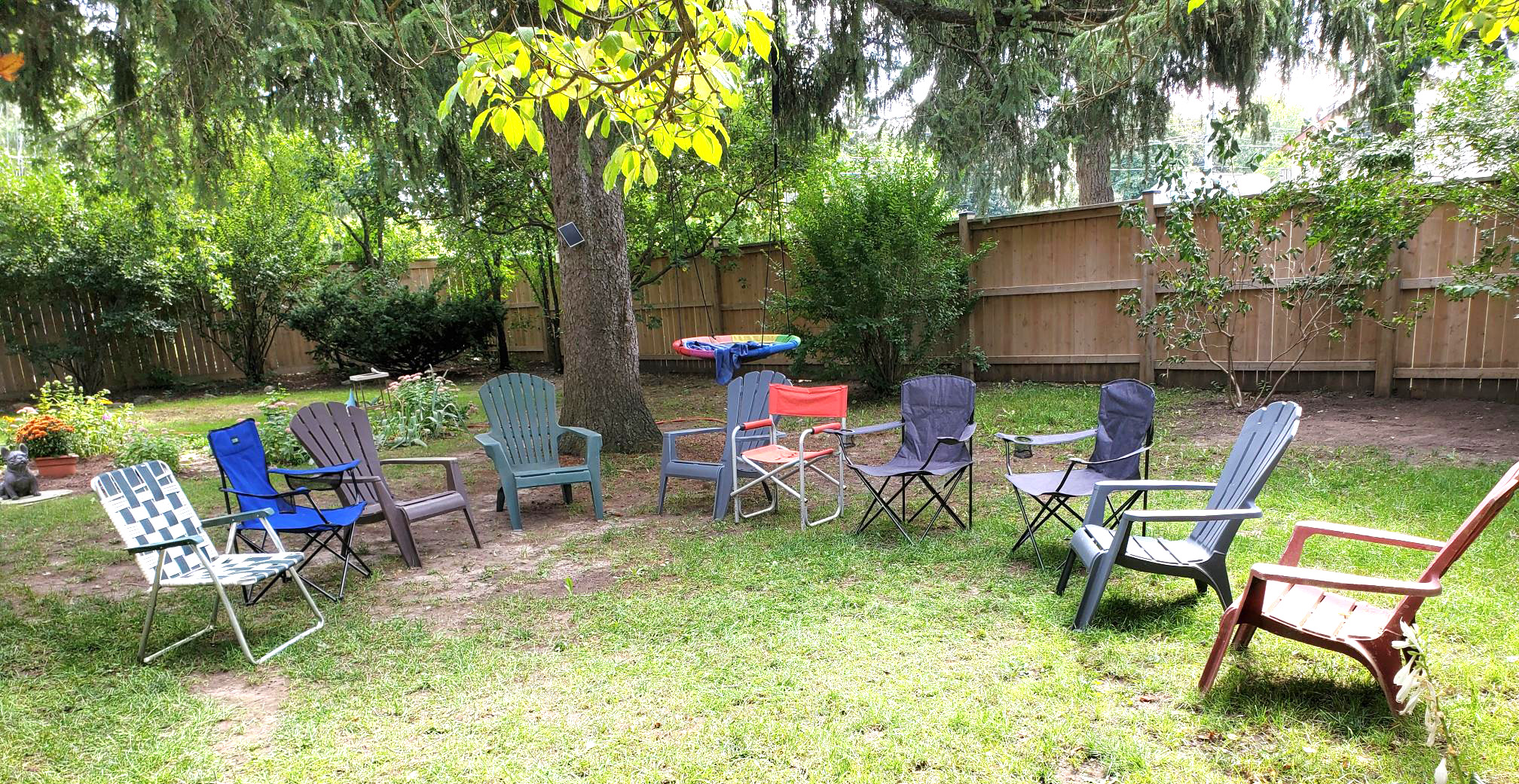
I happened to take this image of a circle of empty chairs a group of us were sitting around in at a recent family get-together. This is an actual image, not an AI creation.
I thought it would be interesting to see what ChatGPT could do if I asked it to put people in the chairs. So I uploaded a couple of pics I had taken previously of some of our group gathered around in the living room.
As usual I gave very limited direction, just saying (in my prompt) something like “put these people in these chairs”. This was after I had uploaded both the original picture, and the one of the people milling about in the living room.
The end result was pretty impressive.
I don’t want to show you that version of the result because it contains real people who had not given me their permission. Instead I thought it might be instructive to see what Chester (ChatGPT) could do with some people drawn from random images found somewhere on line.
Then I thought, “Why not get Chester to create the people?”
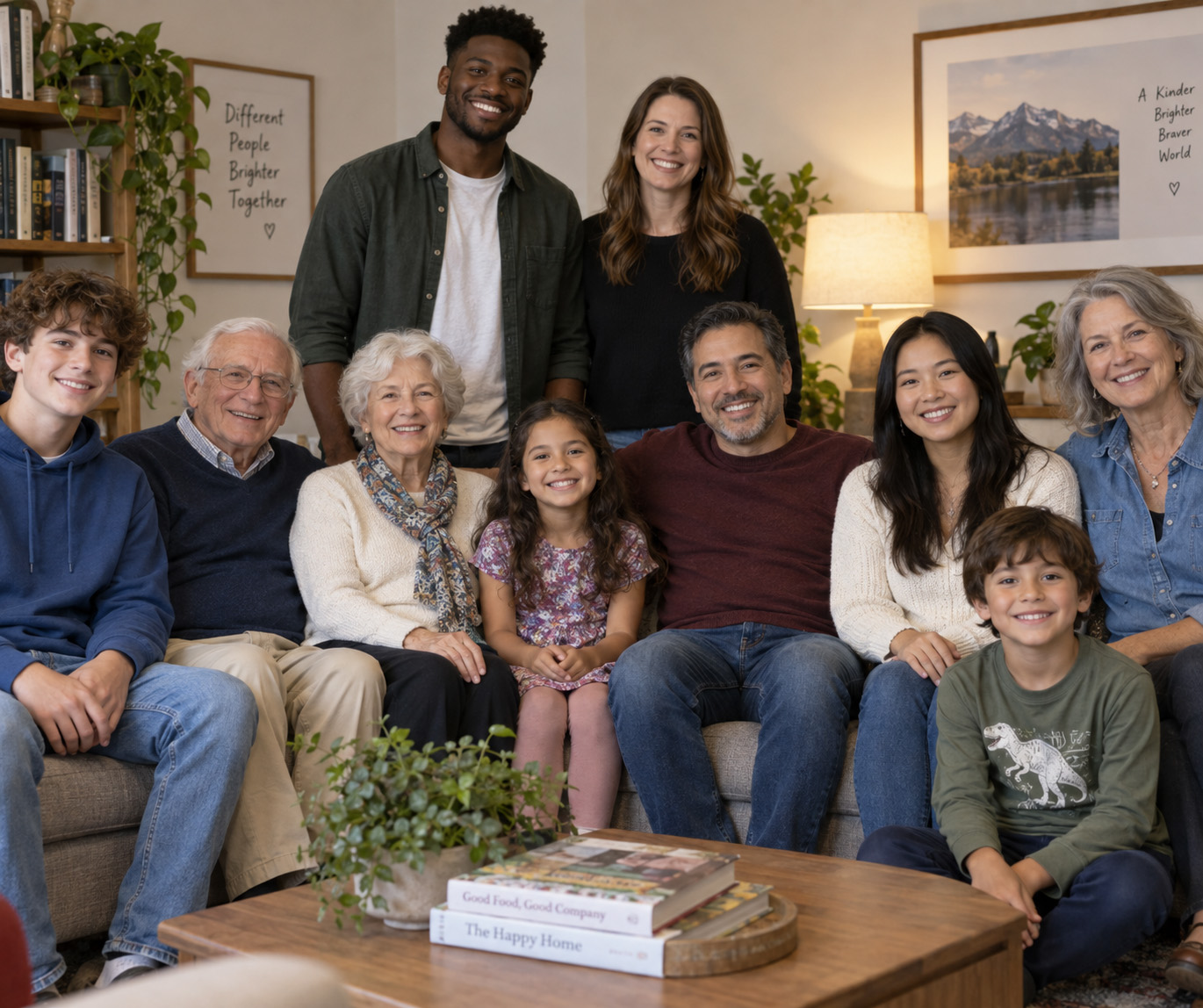
So I entered in my prompt the following: “Provide me an image of a group of 10 people of different ages, two standing and the rest sitting. Their faces must be visible.” This is what I got, first try:
So then I uploaded the empty chair pic (done a week or so before) and said: “Now put these people in the scene of the empty chairs in the back yard.” And this is what I got:
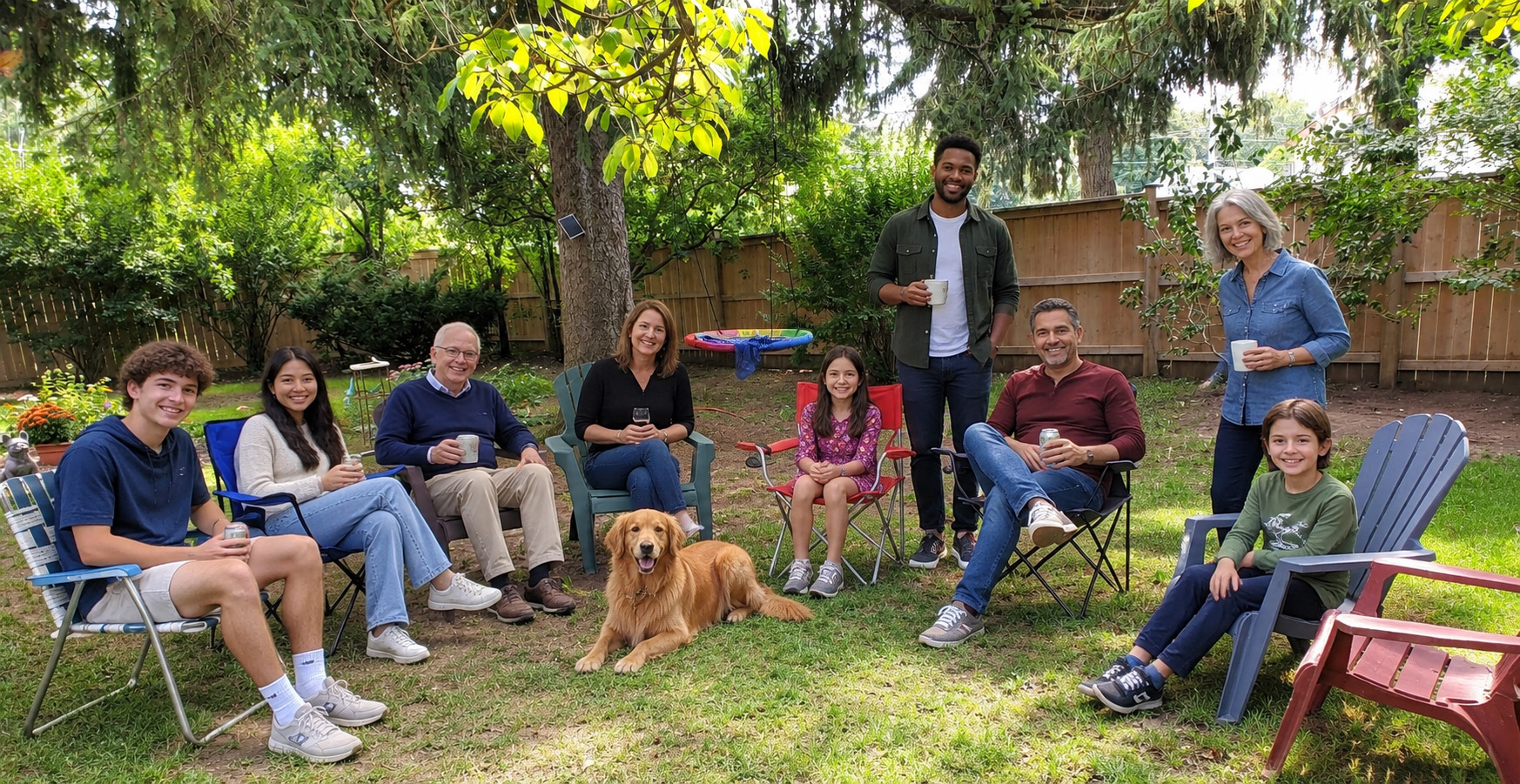
Pretty cool.
After I got this result I realized I probably could have avoided the 2nd step (generating the random people) by just asking Chester to put some people directly into the chairs, like this: “”Put of a group of 10 people of different ages, two standing and the rest sitting in these chairs. Make sure their faces are visible.”
Conclusion
You may conclude that this opens the door to all kinds of nefarious possibilities. Like for instance creating images of people you don’t like doing all sorts of illegal things. Like those instances in the movies where a detective takes pictures of someone having an affair. No need for actual pictures. Just create them from otherwise innocent pictures of the people involved.
At the same time there are positive possibilities for businesses involved in things like advertising. Where not so long ago if you wanted a picture of a model showing off some product you had to hire a photographer, create an elaborate set , and hire a good looking model. Chester’s capabilities make the photographer, elaborate set and real model unnecessary. This is bad news for the photographer, model, and set designer. But good news for the agency and the client.
How this will work out over time we’ll have to wait and see.



About Author

AI has actually been a huge help for me while working on Before The Guns Roared. It let me create historically‑accurate images of my ancestors and early Upper Canada scenes — things we obviously don’t have photographs of. And being self‑published, it made the whole process affordable. If I had the funds, I’d absolutely consider commissioning real artwork — I’ve got several relatives who are amazing artists — but AI gave me a way to bring those people and settings to life without breaking the bank. It also saved a ton of time once I got familiar with the different AI formats and apps, so I could focus more on the writing and research instead of waiting on artwork.
Thanks for the comment Mark. I agree completely. There are obviously limitations and many people are negative towards AI because of them. But I think this is why we need to understand the limitations and focus on the positives. Rather than whining about technological changes and how they eliminate more traditional techniques we need to accept the changes and learn how to take advantage of them.